An exploration into modern theories.
The clashing of the two most successful scientific theories (Quantum Mechanics and General Relativity) on the nature of time has caused a divide in modern physics. Quantum Mechanics (QM) uses a classical, absolute, linear concept of time, whereas General Relativity (GR) states that time is relative. The author proposes a new classification framework for the ideas on time using three views. The first is nihilistic – that time does not exist at all. The second is “creative” – that time is constantly being created (due to cosmic expansion). The third is “sustained” – that time is of a sustained nature and the laws of physics change over time.
The author concludes that the “sustained” view requires much more detailed study and that the conflict between QM and GR can only be solved by resolving the problem of time.
I. Introduction
The problem of what time really is and its characteristics is one of the biggest unsolved problems in physics. Time is integral to all physics, because physics is the study of “the regular succession of events” [1]. The scientific approach to time has changed throughout history, varying between cyclical and linear views. With the birth of thermodynamics in the nineteenth century, the “arrow of time” finally appeared to have been rendered mathematically in the form of an equation by Ludwig Boltzmann, showing that Newton was right about time being unidirectional [2][3]. However, Einstein's theory of relativity and the development of quantum mechanics have thrown spanners in the works of the traditional Newtonian paradigm, by showing that time is relative [4][5].
In modern physics, the scientific perception of time has reached a crossroads and is disagreed upon by physicists. This paper set out to explore what time is or is not and to further understanding towards a universally accepted theory of time.
Different from the commonly accepted classification of the theories of time into “dynamic” and “static” (A and B in [6]), the author proposes a new classification framework using three views: a) a nihilistic view that time does not exist and our perception of time is an illusion, b) a “creation” view that time is constantly being created, and c) a “sustained” view that time is of a sustained nature [7][8][9].
II. Newton
Isaac Newton created the modern theory of time as a framework for his scientific advancements. Newton is best known for the establishment of classical mechanics, and this is the study of the motion of objects – and motion is the change in position of an object in a given time. Therefore, the characteristics of time had to be defined in order for Newton's theories to work. This framework consisted of six pillars – Order, Continuity, Flow, Simultaneity, Duration and an “Arrow” – the concept of time being unidirectional [10]. All of these concepts were combined into an idea of a “master clock” – a measurement of “absolute time”, that has no regard for any changes in the universe [11]. The concept of “absolute time” functions as a framework for all events to happen – events and objects move in time. Despite this being an oversimplification of the world around us, this abstraction was good enough for Newton's physics to work. Despite Newtonian time and the “master clock” theory being extremely popular in physics, Gottfried Wilhelm Leibniz, one of Newton's contemporaries, held the opposing view – time is relative. Contrary to Newton, Leibniz argues that the concept of absolute time is wrong, and that “time is an order of successions” [12]. This implies that time is not the framework in which events are located, but is the “system of relations” between events [13].
III. Boltzmann
In “On the Moving Force of Heat” (1850), Rudolf Clausius introduced the basic concept of the Second Law of Thermodynamics: “Heat can never pass from a colder body to a warmer body without some other change” [14]. In 1865, he created a quantity to measure this irreversible heat change, calling it “entropy”. He reformulated the Second Law to state that entropy cannot decrease (i.e. the change in entropy is always zero or positive):
dS ≥ 0
The Second Law can be seen in action when leaving a hot cup of tea on a table: after some time, the tea itself becomes cooler, and the surroundings of the cup become warmer (until equilibrium is reached) – hence heat always flows from hot to cold. This is the only equation in the whole of physics that differentiates between past and future, because all other theories in physics work perfectly backwards as well as forwards, hence they are time-independent [15]. This equation has an inherent distinction between past and future because it states that the entropy at a certain point in time cannot be more than the entropy at a certain point after that. Therefore, this equation implies that there is a unidirectional flowing of time, and agrees with Newton's theory and our everyday perceptions of time.
Ludwig Boltzmann continued the development of the theory of entropy. Boltzmann's definition of entropy was “the number of possible microstates contained in a macrostate”, where a microstate is the arrangement of each molecule in a system at a single instant [14], and a macrostate are the general properties of the system, like temperature, pressure, volume and density [16]. By applying this definition of entropy to the Second Law, it now means that the arrangement of particles in a system must get more and more disordered over time, because the number of possible microstates in a macrostate increases. Boltzmann's ideas of microstates and macrostates became the accepted approach for looking at entropy, because it was now easier to quantify (for example through the Boltzmann equation).
IV. Einstein
A. Special Relativity
In his 1905 paper “On the Electrodynamics of Moving Bodies”, Albert Einstein posited that there is no such thing as a “master clock” as seen in the Newtonian paradigm – this is special relativity [4]. Referring back to Newton's theory, the master clock must have “simultaneity” inbuilt within it – meaning that there is an absolute measurement of time that is the same at every point in the universe, no matter how far apart they are. In Einstein's theory of special relativity, this concept is proven to be impossible by the relativity of simultaneity – which states that there is no absolute present, and that instead the “present” depends on the observer's reference frame. Einstein used thought experiments or “gedankenexperimente” to explain his ideas – in this case, the thought experiment is about a moving train. Imagine that a stationary observer is watching a train move past him, and that he sees two bolts of lightning strike the front and back of the train at the same time. Einstein says that if there is another observer on top of the train, they will see the bolt at the front of the train first. This is because the observer is moving away from the light pulse from the back of the train and towards the light pulse from the front of the train, so the pulse from the front of the train will reach the observer first. Einstein says that because the two observers see different things, no one is right – there is no “absolute frame of reference”. It could be argued that the stationary observer's view is the correct one, but the “stationary” observer could be moving relative to another observer, and so there is no “absolute” stationary frame, and so this argument is false. This concept is called the “relativity of simultaneity”, and means that time is different for all moving bodies, and time will move slower for a moving object relative to a stationary observer than time for a stationary observer. When taken to extreme levels, for example in the film “Interstellar”, time dilation occurs, where time for an astronaut moves far slower than time for someone on Earth [17].
While this idea is clearly very counterintuitive, as it would appear self-evident that time flows the same everywhere in the universe, Einstein's theory has been proved experimentally, most famously in the Hafele–Keating experiment [18]. In 1972, Joseph Hafele and Richard Keating flew four caesium atomic clocks around the world, to see whether they would gain or lose time depending on which direction they were flying (the clocks were compared to a reference atomic time scale at the U.S. Naval Observatory). When flying westward, the clocks were predicted to gain time, because they move against the direction of Earth's rotation (eastward). Therefore, the clocks move slower than the ground clocks, and gain time. When flying eastward, the clocks were predicted to lose time, because they move in the direction that Earth is, but faster. So, the clocks move faster than the ground clocks, and so lose time. The experiment proved this theory to be true for both eastward and westward motion, and the values that the clocks shifted by agreed with relativistic calculations. It is worth noting that the time difference is on the scale of 10-8s, but there is a measurable difference nonetheless.
B. General Relativity
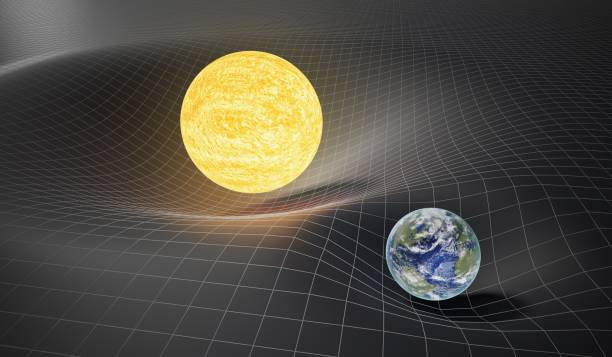
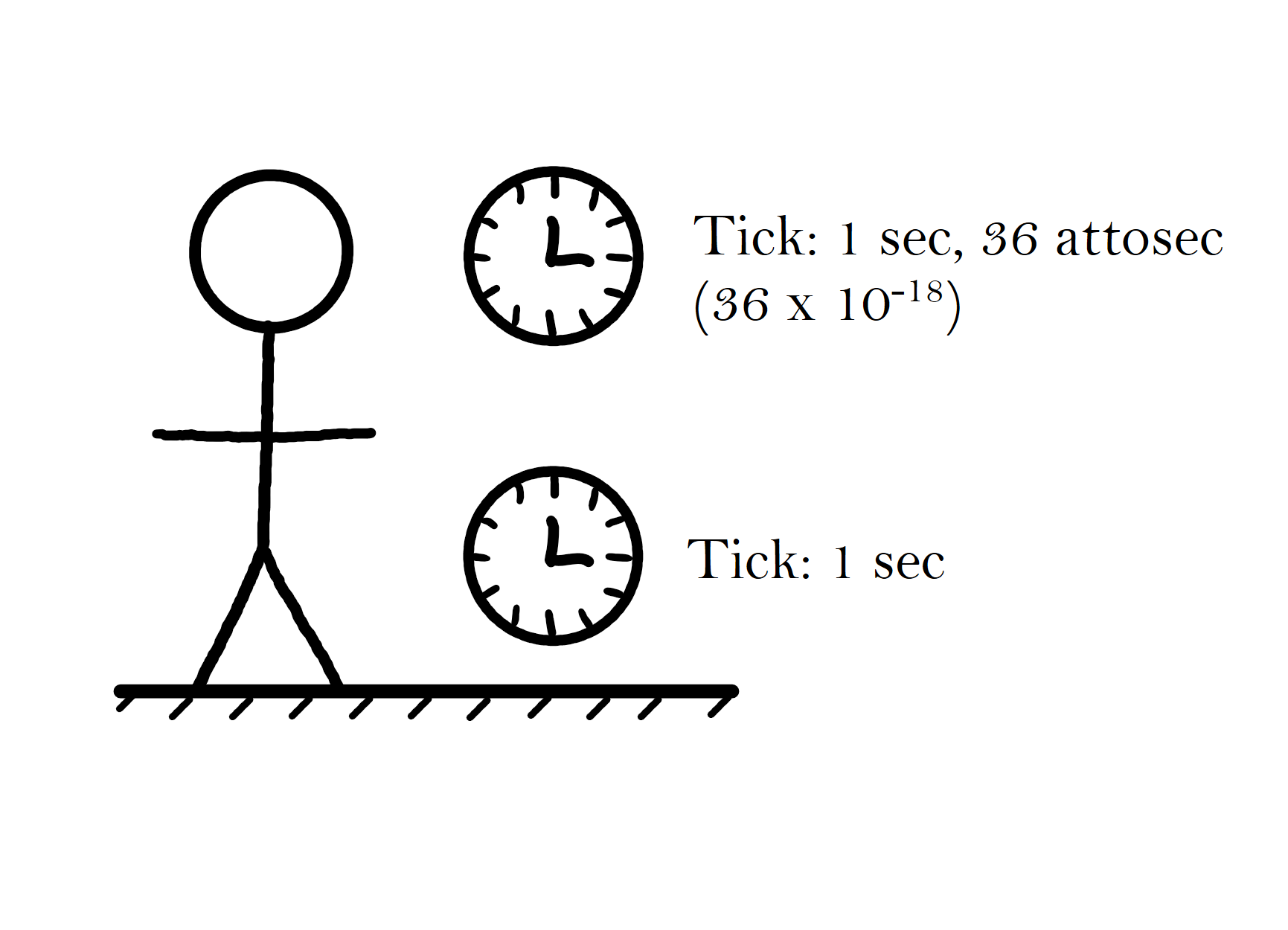
Einstein's theory of General Relativity (GR), published in 1915, combines space and time into four-dimensional “spacetime” [5]. Einstein said that space is curved by mass (as shown in Figure 1). Therefore, because space and time are unified, the passage of time at a point is affected by its distance from a mass. Einstein predicted that the lower the gravitational potential (that is, the closer the clock is to the mass), the slower time will pass. This means that time flows slower at one's feet than to one's head, because the head is further away from the Earth's core than the feet, as shown in Figure 2. This theory, similar to special relativity, is also counterintuitive but was proved by the Hafele–Keating experiment referenced earlier. In addition, this “gravitational time dilation” [19] has the implication that the centre of the Earth is actually two and a half years younger than the surface (over the lifetime of the Earth), due to there being less gravitational potential at the centre [20].
V. Quantum Mechanics
Quantum physics was born at the start of the twentieth century with the aim to explain some of the phenomena that classical physics could not. One such phenomenon was the photoelectric effect – the emission of electrons from a material when light is incident on it. Classical mechanics could not explain this because light was thought to be a wave, as Maxwell had proved [22]. However, this means that the emission of electrons should depend on the intensity of the incident light, but this was not the case and instead, emission depends on the frequency of incident light [23]. Albert Einstein showed in his 1905 paper “On a Heuristic Viewpoint Concerning the Production and Transformation of Light” that light had to be made of particles called “photons” or “quanta” to explain the photoelectric effect [24]. With the birth of these “quanta”, quantum physics began.
There is now obviously a discrepancy in that light behaves both as a wave and as a particle. This leads to an “indeterminism” in quantum physics, where we do not know how a system behaves until we measure it. This “indeterminacy” is a key concept in quantum mechanics, and is expressed mathematically by Heisenberg's Uncertainty Principle [25]. This states that there is a limit to the precision with which a linked pair of properties (for example position and momentum) can be simultaneously (at a single instant in time) known. If the position and momentum of every particle in a system were known, then it would be possible to perfectly predict the future of that system using advanced maths, but this is not the case.
Quantum Mechanics uses the linear, Newtonian concept of time, because all measurements are made at certain “instants” and they change over a period. Despite the Uncertainty Principle, Quantum Mechanics has still been able to explain and predict physical phenomena to a remarkable degree of precision (in some cases exact to one part in 1012) [26].
VI. Conflict between GR and QM
General Relativity and Quantum Mechanics are both highly successful theories to explain the physical world, yet they hold opposing intrinsic concepts of time (relative versus absolute). Scientists have been working to alleviate this conflict by “Quantum Gravity” i.e. “gravitizing” Quantum Mechanics, or “quantizing” relativity [27].
VII. Current ideas of time
The author proposes and uses a new classification framework using three views to classify modern notions on time: 1) A nihilistic point of view, that time does not exist at all. 2) A “creation” point of view, that new time is being constantly created. 3) A “sustained” point of view, that time is essential to how the universe works, and that the laws of physics change over time.
The author posits that this framework can accommodate future ideas and theories on time.
A. Time doesn't exist?
Carlo Rovelli's interpretation of Boltzmann's theory of entropy is that while “the number of microstates in a macrostate” always has to increase, the concept of the “macrostate” is simply a human construct. In “The Order of Time”, Rovelli equates order and disorder to a pack of cards [7]. Rovelli's analogy for the gradual disordering of the universe is as follows: originally, all of the red cards in the deck are next to each other and all of the black cards in the deck are next to each other, in increasing suit and number. This means that the cards are “perfectly ordered”. So, when the cards are shuffled, black cards and red cards will now be next to each other, with the cards no longer increasing in suit and number. Hence, the shuffled deck can now be thought of to be “more disordered” than the initial deck.
However, Rovelli says that there was nothing “particular” about the shuffled deck to begin with, and that the ordering of cards in the initial deck was only ordered because humans see it to be in that way [7]. Therefore, there is no intrinsic difference to the first deck and the second deck – it is only because humans see it in that way. Applying this to the Second Law of Thermodynamics, which says that disorder can never decrease, this argument says that disorder does not actually exist, since it is just human perception that sees systems as “disordered”. This leads to the idea that the Second Law does not actually exist in reality – it only exists in the human mind. Therefore, since it was postulated earlier that the Second Law is the only law in physics which is dependent on time, and that the Second Law is essentially only operational in the human mind, it can be said that time does not exist. Rovelli builds on this by arguing that Heisenberg's Uncertainty Principle is essentially the same as the Second Law – both of them are products of the “blurring” of the human mind, and hence not completely real.
This argument is somewhat convincing because it uses one of the most fundamental laws of physics and re-interprets it in a logical manner to provide a clear argument. However, it can be argued that the cards have an “intrinsic order” to them, because they are numbered and have a suit. Hence, they are not analogous to atoms in a system, because atoms do not have any sort of intrinsic numbering to them, and therefore no intrinsic order. Therefore, Rovelli's argument that the Second Law of Thermodynamics is only real in the human mind is unconvincing.
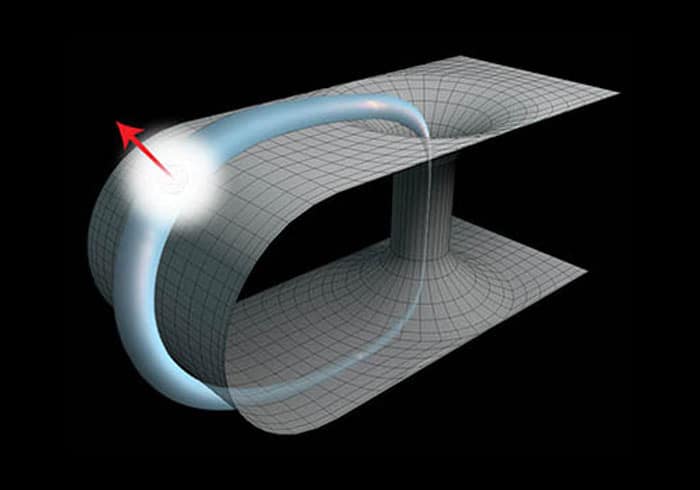
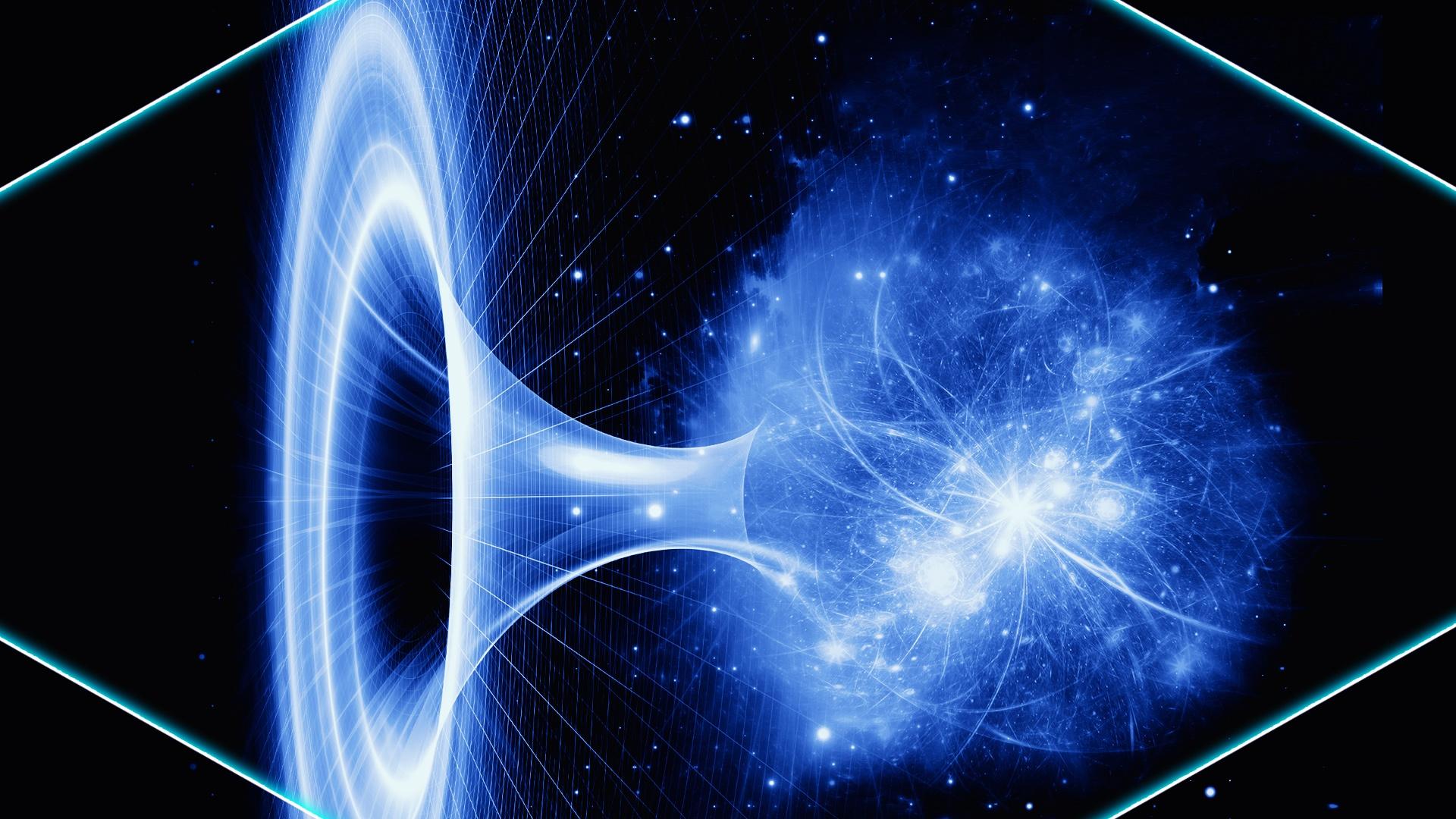
Another argument for the non-existence of time is the wormhole paradox. By extending Einstein's GR equations, it can be found that spacetime can “fold into itself” and give “closed time-like curves” (CTCs) [28]. This is caused when spacetime curves so much that a hole is ripped through it, as shown in Figure 3. This means that, hypothetically, an observer moving along this path would move in time as well as in space, and because the path is a loop, they could return to their original position in both space and time. This is time travel, and leads to various paradoxes like the grandfather paradox (where an observer could go back and kill their own grandfather – which would mean that they would not exist) and the issue of free will [29]. So, if CTCs were physically possible, this means that time travel would be possible, so any concept of an “arrow of time” would be impossible. This would mean that time is essentially just the same as space – it has no order or flow to it, it just exists and can be manipulated.
This approach is clearly logical, but it is completely counterintuitive because of the paradoxes mentioned. In addition, it has been detected that the solutions to Einstein's GR equations which allow for CTCs are in a range where physical matter breaks down, making wormholes and time travel implausible in the current physical understanding of the universe [28]. Therefore, the CTC argument is not yet convincing because of the lack of evidence, but more work is still to be done on the subject.
B. Time is constantly created
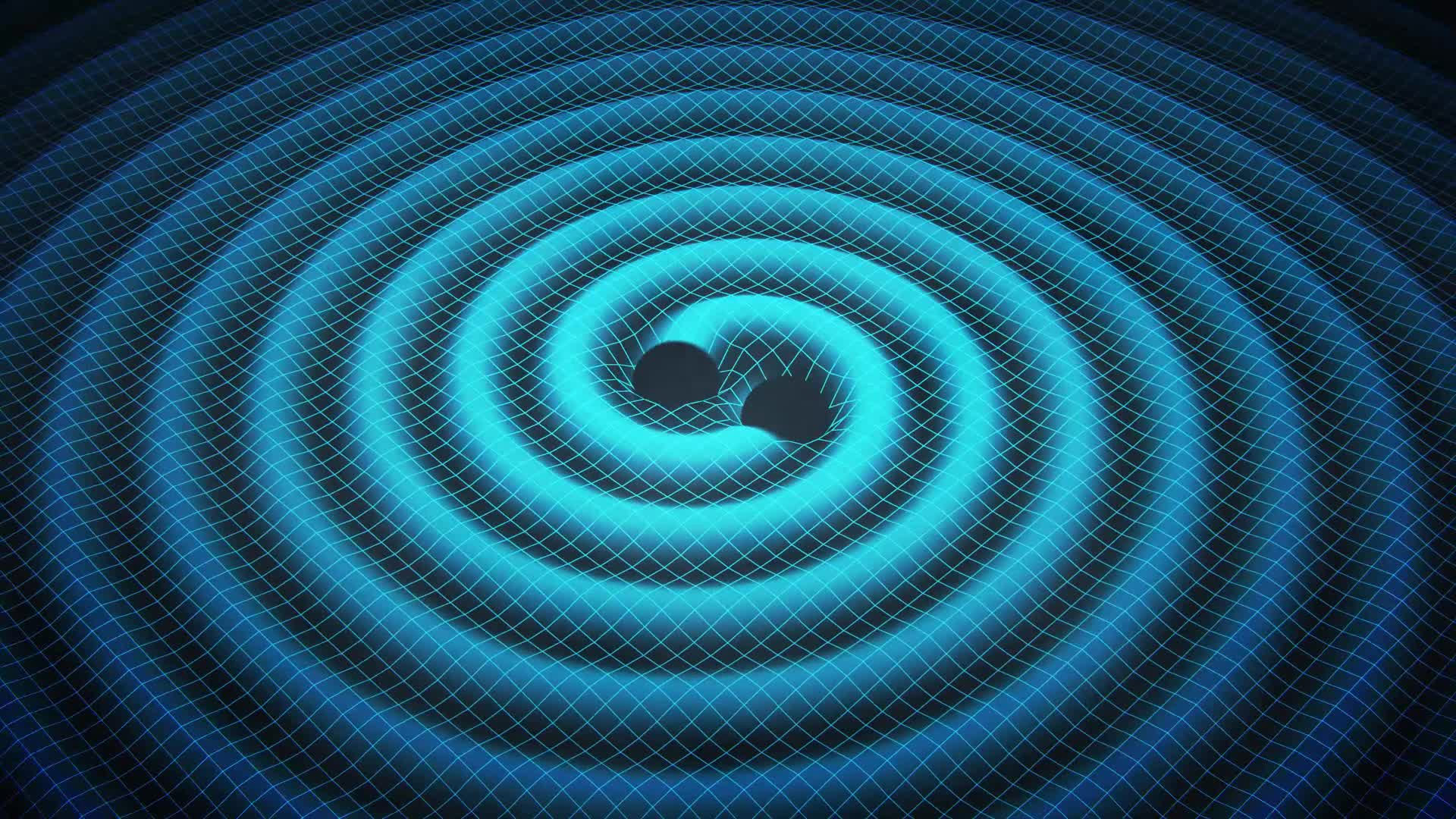
In 1929, Edwin Hubble discovered that the universe was constantly expanding [30]. The common analogy for this is points on a balloon – as the balloon inflates, the space between the points increases not the size of the points themselves. This cosmic expansion in itself can be argued to be a “cosmological arrow of time” (time flows in the direction that the universe expands) [31]. Richard Muller combines expansion with Einstein's theory of spacetime to argue that “new time” is being created every instant [8]. To test this theory, Muller refers to an event in which space is created – a black hole merger, as shown in Figure 4. Muller calculates that the time created during a black hole merger is approximately 1 millisecond. To prove this experimentally, he proposes analysing gravitational wave data from LIGO (Laser Interferometer Gravitational-Wave Observatory). As black holes are merging, gravitational waves are produced, and when they merge into one object, gravitational waves stop being produced. In the “chirp” between the peak wave reading and no waves being produced, Muller predicts that 1 millisecond will be created, and that this can be measured by LIGO.
This is a logical argument, and is built on a tested principle (Hubble expansion of the universe). However, there is no experimental proof for this theory so far. Despite this, the concept of the “cosmological arrow” of time is a very persuasive theory for the existence of the arrow of time and time itself.
C. Time does exist (in a sustained sense)
Lee Smolin, inspired by Bryce DeWitt, argues that time is essential for the universe to exist in his book “Time Reborn” [9]. He does this by arguing the case for cosmological natural selection. Cosmological natural selection is a theory that attempts to explain why the universal constants of physics are the values that they are. The question of why the universal constants (such as the mass of the proton, electron and neutron) are almost perfect for life to exist has yet to be resolved, and this happens to be an argument used to substantiate the existence of God (by using the idea that the margin of error for these values is so small that a divine creator must have set them) [32]. Just like Darwin, Smolin attempts to answer this question by using natural selection. The premise of the argument is that “new universes are born from the black holes of an existing universe” (as shown in Figure 5), and that the constants can be likened to genes, because they govern how the universe (the organism) functions. Similar to original evolution, when new universes are created, the constants that govern them change slightly (these are mutations). In Smolin's analogy, the “fitness” of a universe, that is, how many offspring it produces, is the number of black holes (and therefore new universes) that it can produce. Any new universes which have constants that do not produce black holes will collapse, as they are “unfit” for survival. Since the constants of the universe are always changing (and producing more black holes), time must exist, because there is no “final state”, as new black holes and universes are always being produced. Therefore, this theory of “cosmological natural selection” answers two questions (why the universe has the specific constants it does, and does time exist?) with one approach.
Smolin's theory is clearly rather enticing, and there is a logical flow to the argument. However, there is a lack of evidence for cosmological natural selection, namely the premise upon which the whole theory stands – that universes are born from black holes and that the constants of the universes change after reproduction. The premise is unfalsifiable, because we cannot go into a black hole and find out whether or not universes are being created inside. Despite this, the logic is still convincing.
VIII. Conclusion
In this research essay, the development of the ideas of time since Newton has been looked at and the current theories on the nature of time have been discussed and analysed. The author proposed and used a new classification framework for the theories of time. From the author's perspective, the nihilistic point of view, in which time is an illusion and not part of the real world, goes against common sense (because it is impossible for humans to visualise a world without time), and is a leap that he is unwilling to take. The “creation” point of view due to Hubble expansion is promising, but yet to be proved. The author believes that the “sustained” point of view, as seen in Cosmological Natural Selection, is a more convincing theory of time, because it agrees with the human perception and explains other important questions (e.g. why the constants of the universe have the values they do), however the falsifiability issues behind this theory have to be resolved. The mathematics behind these theories is beyond the scope of this paper. Even though the original question of “What is time?” remains unanswered, the author believes that the conflict between the two most successful theories of physics (Quantum Mechanics and GR) can only be solved by resolving the problem of time.
Acknowledgements
I would like to express my gratitude to Dr Blackaby for his guidance throughout the project.
References
- [1]J. C. Maxwell, Matter and Motion. Cambridge University Press, 1876.
- [2]L. E. Boltzmann, “Lectures on gas theory,” Dover Publications, 1896, (Accessed on 06/05/2024).
- [3]I. Newton, Philosophiæ Naturalis Principia Mathematica, 1687, (Accessed on 06/05/2024).
- [4]A. Einstein, “On the electrodynamics of moving bodies,” Annalen der Physik, June 1905, (Accessed on 05/11/2024).
- [5]A. Einstein, Relativity: the Special and General Theory, 1916, (Accessed on 05/30/2024).
- [6]J. M. E. McTaggart, “The unreality of time,” Mind, 1908, (Accessed on 06/05/2024).
- [7]C. Rovelli, The Order of Time, E. Segre and S. Carnell, Eds. Allen Lane, 2018.
- [8]R. A. Muller, Now: The Physics of Time. W.W. Norton Company, 2016.
- [9]L. Smolin, Time Reborn: From the Crisis in Physics to the Future of the Universe. Houghton Mifflin Harcourt, 2013.
- [10]C. Callender, “Is time an illusion?” Scientific American, 2010.
- [11]“Newton's views on space, time, and motion (Stanford Encyclopedia of Philosophy),” plato.stanford.edu/entries/newton-stm, (Accessed on 04/05/2024).
- [12]G. W. Leibniz, “Mr. Leibniz's third paper,” newtonproject.ox.ac.uk, 1716, (Accessed on 05/11/2024).
- [13]“Leibniz's philosophy of physics (Stanford Encyclopedia of Philosophy),” plato.stanford.edu/entries/leibniz-physics, (Accessed on 05/11/2024).
- [14]R. Clausius, “On the moving force of heat,” John Van Voorst, 1850.
- [15]A. S. Eddington, “The nature of the physical world,” Cambridge University Press, 1928, (Accessed on 05/11/2024).
- [16]P. D. Beale, “Statistical mechanics,” Butterworth-Heinemann, Sept 1996, (Accessed on 05/09/2024).
- [17]K. Thorne, The Science of Interstellar. W.W. Norton Company, November 2014, (Accessed on 05/29/2024).
- [18]J. Hafele and R. E. Keating, “Around-the-world atomic clocks: Observed relativistic time gains,” Science, 1972, (Accessed on 05/30/2024).
- [19]A. Einstein, On the relativity principle and the conclusions drawn from it, 1907, (Accessed on 05/30/2024).
- [20]U. I. Uggerhøj, “The young centre of the earth,” European Journal of Physics, Volume 37, April 2016, (Accessed on 05/30/2024).
- [21]C. Chou et al., “Optical clocks and relativity,” Science, September 2010, (Accessed on 06/05/2024).
- [22]J. C. Maxwell, “A dynamical theory of the electromagnetic field,” The Royal Society, 1865, (Accessed on 05/31/2024).
- [23]S. Adams and J. Allday, Advanced Physics. Oxford University Press, 2000.
- [24]A. Einstein, “Concerning an heuristic point of view toward the emission and transformation of light,” Annalen der Physik, 1905, (Accessed on 05/31/2024).
- [25]W. K. Heisenberg, “On the actual content of quantum theoretical kinematics and mechanics,” Zeitschrift für Physik, 1927, (Accessed on 06/01/2024).
- [26]X. Fan et al., “Measurement of the electron magnetic moment,” Physical Review Letters, February 1927, (Accessed on 06/01/2024).
- [27]R. Penrose, “On the gravitization of quantum mechanics 1: Quantum state reduction,” Foundations of Physics, January 2014, (Accessed on 06/02/2024).
- [28]O. Bertolami, “The physics of time: Current knowledge and unanswered challenges,” Proceedings of the 13th Bial Symposium, “The mystery of time”, April 2022, (Accessed on 05/31/2024).
- [29]K. S. Thorne, “Closed timelike curves,” 13th Conference on General Relativity and Gravitation, February 1993, (Accessed on 05/31/2024).
- [30]E. Hubble, “A relation between distance and radial velocity among extra-galactic nebulae,” Proceedings of the National Academy of Sciences of the United States of America, March 1929, (Accessed on 06/03/2024).
- [31]S. W. Hawking, A Brief History of Time. Bantam Books, 1989.
- [32]P. Davies, “Cosmic jackpot: why our universe is just right for life,” Penguin, 2006, (Accessed on 05/12/2024).